
Aviator Slot – The Mechanics Behind Canada’s Favorite Game

Aviator isn’t a slot machine in the traditional sense — there are no spinning reels, no paylines, and no fruit symbols. Instead, it’s a crash-style game that redefines how Canadians experience online gaming. At first glance, it looks almost minimalist: a small red plane ascends across the screen, a multiplier rises, and then, suddenly, the plane flies away. Your mission? To cash out before it disappears. Simple — but deceptively deep.
This simplicity hides complex math and psychology. Beneath the visual layer lies a finely tuned random number generator (RNG), designed to produce unpredictable outcomes while maintaining fairness and tension. For analysts and casino enthusiasts, Aviator represents a fascinating intersection of game theory, risk control, and digital entertainment.
Understanding the Core Mechanic – How Aviator Works
Aviator runs on a provably fair system — a cryptographic method ensuring that every round’s result is verifiable and unmanipulated. The main mechanic revolves around exponential growth: each round starts with a multiplier of 1.00x, which increases continuously until the crash event.
The exact “crash point” (the moment the plane flies away) is calculated based on random seeds generated by the server and players, then verified via a hashing algorithm (SHA-256). The unpredictability of this value is what creates both excitement and risk.
Gameplay flow (simplified):
- A new round begins – all bets must be placed before takeoff.
- The multiplier starts at 1.00x and rises indefinitely.
- Players may cash out manually or use auto cash-out.
- When the plane flies away (crash), any remaining bets lose.
Aviator Game Parameters Overview
| Parameter | Description |
| Game Type | Crash Game (non-reel) |
| RNG Type | Provably Fair (client + server seed system) |
| Starting Multiplier | 1.00x |
| Max Multiplier | Up to 10,000x (rare) |
| Average RTP | 97.0% – 97.2% |
| Volatility | Very High |
| Round Duration | 8–12 seconds |
This combination of speed, transparency, and volatility makes Aviator one of the most analytically rich games in the iGaming world.
The Mathematical Foundation: RNG and Probability Curves
While most slot games use weighted reels and symbol tables, Aviator’s RNG is based on multiplicative probability curves. Each round’s multiplier follows a logarithmic distribution — meaning small multipliers (like 1.20x–2.00x) appear often, while large multipliers (100x+) are statistically rare.
For example, a typical distribution might look like this:
| Multiplier Range | Probability (Approx.) |
| 1.00x–2.00x | 40% |
| 2.01x–5.00x | 30% |
| 5.01x–10.00x | 20% |
| 10.01x–100x | 9% |
| 100x+ | <1% |
This probability gradient is what fuels Aviator’s psychological depth. Players are constantly balancing the temptation of higher returns with the risk of total loss. Mathematically, it’s similar to a risk/reward optimization problem, and psychologically, it engages the loss aversion principle — a core aspect of behavioural economics.
RTP and Volatility – A Perfectly Balanced Equation

Aviator’s RTP (Return to Player) sits around 97%, which is higher than many traditional online slots. However, this figure must be understood in context. High RTP doesn’t mean predictable results. Because Aviator is a high-volatility game, variance between short-term sessions can be extreme.
- High volatility means long losing streaks are possible, followed by rare but massive multipliers.
- The 97% RTP is calculated over millions of rounds — not over a single player’s experience.
- Therefore, Aviator rewards discipline and timing, not blind luck.
What is RTP in Casino Games (Including Aviator)?
RTP stands for Return to Player. It’s a mathematical term used in online gaming and slots to describe the average percentage of all wagered money that a game will pay back to players over a long period of time.
In simpler terms — if a game has an RTP of 97%, it means that, in theory, for every $100 wagered, the game will return $97 to players over millions of rounds. The remaining $3 represents the house edge (the casino’s built-in profit margin).
How RTP Works in Aviator
Aviator has an RTP of around 97%, which is quite high compared to many standard slot machines (which usually range from 94% to 96%).
But here’s the catch — Aviator’s RTP is based on long-term statistical performance, not on individual sessions.
This means:
- In a short session, you might win or lose far above that theoretical percentage.
- Over millions of rounds, the math “balances out” to about 97% returned to players.
Formula (Simplified):
RTP=Total Amount Returned to PlayersTotal Amount Wagered×100%RTP = \frac{\text{Total Amount Returned to Players}}{\text{Total Amount Wagered}} \times 100\%RTP=Total Amount WageredTotal Amount Returned to Players×100%
For example, if $9,700,000 is returned from $10,000,000 wagered,
RTP=(9,700,000/10,000,000)×100=97%RTP = (9,700,000 / 10,000,000) \times 100 = 97\%RTP=(9,700,000/10,000,000)×100=97%
RTP vs. Volatility

While RTP shows how much a game pays back on average, volatility shows how often and how unevenly those returns occur.
| Term | Meaning | Impact on Player |
| RTP | Long-term average return | Higher RTP = better theoretical odds |
| Volatility | Frequency and size of wins | High volatility = fewer but larger wins |
So, in Aviator’s case:
- RTP: ~97%
- Volatility: Very high
For comparison:
| Game Type | Average RTP | Volatility |
| Classic Slots | 94–96% | Medium |
| Progressive Jackpots | 88–92% | Very High |
| Aviator | 97% | Very High |
Aviator’s model is designed for players who enjoy mathematical precision — those who prefer observing trends, experimenting with patterns, and refining timing rather than relying solely on chance.
Cash-Out Logic and Player Behavior
The cash-out mechanism is where Aviator transforms from a game of chance into a test of decision-making. Every millisecond matters. Players can either:
- Manually cash out when they feel the risk is rising.
- Set auto cash-out to trigger automatically at a chosen multiplier.
This mechanic introduces elements of reaction time and self-control, similar to financial trading. In fact, many experienced players describe Aviator as “crypto-style volatility packaged as entertainment.”
Player Behavior Insights
- Beginners tend to cash out too early (1.30x–1.50x range), minimizing losses but missing big opportunities.
- Experienced players often chase higher multipliers (2.00x–5.00x) and balance auto/manual strategies.
- Statistically, consistent moderate wins outperform risky high-multiplier chases over time.
The tension lies in knowing when to stop — a principle that applies equally in gaming and investing.
Game Interface and Real-Time Dynamics
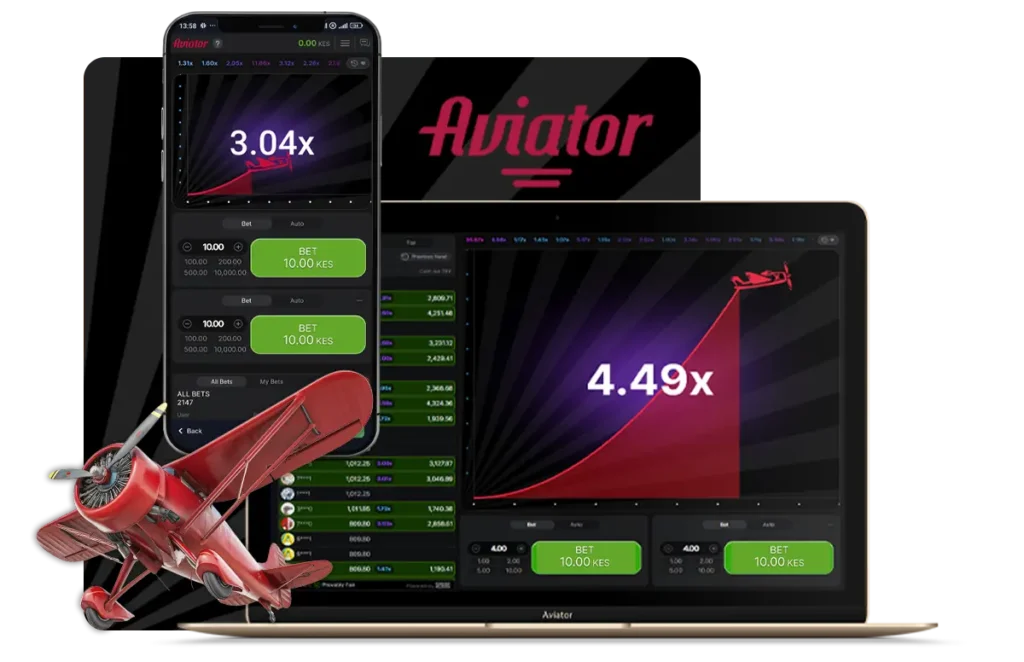
From a user experience perspective, Aviator is deceptively simple but technically advanced. It supports real-time multiplayer sessions, where dozens or even hundreds of players participate simultaneously. You can see other players’ bets, cash-out moments, and winnings — creating a live social environment.
Technical highlights:
- Built using lightweight WebGL animations for smooth cross-device performance.
- Optimized for mobile play (Android and iOS).
- Multi-user data synchronization through websocket protocols.
- Integrated leaderboards and community chat functions.
This creates not just a gambling experience but a real-time psychological theatre — where every decision feels public and immediate.
Strategic Approaches and Analytical Playstyles
There are no guaranteed strategies in Aviator, but mathematical modeling allows us to classify several probabilistic playstyles. These approaches don’t change RNG outcomes but influence your long-term survival rate and bankroll curve.
Low-Risk Strategy (Conservative)
- Set auto cash-out between 1.30x–1.60x.
- Focus on gradual profit accumulation.
- Works best for large bankrolls and long sessions.
Medium-Risk Strategy (Balanced)
- Aim for 2.00x–3.00x range.
- Combine manual and auto cash-outs.
- Recommended for players who track multipliers and patterns.
High-Risk Strategy (Aggressive)
- Target 5.00x+ multipliers with small stakes.
- Accept multiple losses for the possibility of a large payout.
- Useful for statistical testing or variance-based betting.
Each of these strategies demonstrates the underlying math principle: expected value (EV). In Aviator, EV is always negative due to house edge — but correct bet sizing and psychological control minimize loss deviation.
The Role of Provably Fair Technology
Unlike legacy slots, Aviator allows players to verify every round’s integrity using cryptographic tools. After each round, players can view:
- Server seed
- Client seed
- Nonce value
- Hash output
These can be re-calculated using SHA-256 hash functions to confirm the crash result wasn’t altered. This system, borrowed from blockchain methodologies, is part of the reason Aviator became a trusted game in Canada’s regulated online market.
For analytical users, provably fair tech adds an extra layer of transparency — turning a game into a testable mathematical system.
Bankroll Management – The Silent Skill
While Aviator’s interface focuses on timing, the real skill lies in capital management. Because the game’s volatility can wipe out funds quickly, disciplined bankroll control separates recreational players from experts.
Key bankroll principles:
- Limit each bet to 1–2% of total balance.
- Avoid chasing losses — it compounds risk exponentially.
- Use session targets (e.g., 10 wins or 20 minutes) and stick to them.
- Record outcomes and analyze patterns objectively.
When applied properly, bankroll management transforms Aviator from a high-stakes gamble into a structured probability experiment.
Visual and UX Design – More Than Just a Plane
Aviator’s aesthetic simplicity masks a highly optimized design built around human attention psychology. The slow ascent of the plane, the growing multiplier, and the minimalist interface are all designed to focus attention on one critical decision point — when to cash out.
Design psychology factors:
- Red plane color = urgency and excitement.
- Minimal interface = reduced cognitive noise.
- Continuous upward motion = illusion of progress.
- Sudden crash = shock event reinforcing risk awareness.
Together, these elements create a loop of anticipation and reward, similar to high-frequency trading environments or competitive eSports.
Why Aviator Appeals to Canadian Players
In the Canadian market, Aviator stands out for several reasons:
- Transparency: Its provably fair system aligns with the regulatory emphasis on player protection.
- Mathematical depth: Canadian players, especially those familiar with analytics or sports betting, appreciate its logic-driven gameplay.
- Accessibility: It runs smoothly on mobile devices, requires minimal bandwidth, and doesn’t rely on complex graphics.
- Community aspect: Real-time multiplayer elements create a shared, social dynamic often missing in traditional slots.
This combination of trust, simplicity, and skill-like decision-making explains Aviator’s rise in popularity across provinces like Ontario, Alberta, and British Columbia.
Responsible Play and Mental Discipline
Because Aviator operates at a fast pace, it’s crucial to maintain mental awareness. The game’s design encourages rapid engagement, so pauses and cool-down periods are essential. In Canada, responsible gaming frameworks recommend:
- Taking breaks every 15–20 minutes.
- Setting deposit and loss limits.
- Viewing gameplay as entertainment, not income.
Mathematically, Aviator is designed for tension — psychologically, you must counter it with structure.
FAQs: Common Technical and Regulatory Questions
Is Aviator legal in Canada?
Yes. Aviator operates in compliance with provincial iGaming regulations and RNG fairness standards. It’s accessible in regions where licensed online platforms are permitted.
Can you actually win money in Aviator?
Yes — but winnings depend on timing and risk management. The RNG ensures that while long-term odds favor the house, short-term outcomes can vary dramatically.
What’s the RTP of Aviator?
Approximately 97%, though exact figures vary slightly depending on platform RNG configuration.
Is Aviator based on skill or luck?
Primarily luck, but decision timing and discipline add a quasi-skill element, especially over multiple sessions.
Can Aviator be played safely?
Yes. Always play on licensed Canadian platforms and use built-in responsible gaming tools like loss limits and session timers.
Conclusion: A Game of Probability, Not Chance
Aviator isn’t just another slot; it’s a data-driven experience blending mathematical purity, human psychology, and real-time interaction. For Canadian players who value logic and transparency, it’s a near-perfect case study of how modern gaming merges entertainment with analytics.
Every round is a lesson in probability, every decision a test of patience. The plane may crash — but behind every takeoff lies one of the most fascinating RNG models ever built.